Probiotics for Bloating and IBS: How to Run a Sensible Four-Week Trial
There is no officially recommended probiotic for IBS. There is, however, a recognised method for finding out whether one helps you personally — and NICE has written it down.

01What NICE actually says
NICE does not recommend a specific probiotic product and does not guarantee an effect. Its IBS guideline says something more modest and more useful: adults with IBS who choose to try a probiotic should take it for at least four weeks, at the dose the manufacturer recommends, while monitoring the effect on their symptoms.
That sits inside broader IBS management that can also involve diet, lifestyle and other interventions. Bloating is a recognised IBS symptom, but the four-week advice applies to an optional monitored trial for IBS symptoms generally — it is not a specific endorsement for treating bloating.
02What the reviews find
Reviews report signals that some probiotic interventions may improve global IBS symptoms, abdominal pain, bloating or flatulence. The consistent caveat is that results vary substantially by strain and by study.
Guideline positions differ as a result. The British Society of Gastroenterology has suggested that probiotics as a group may improve global symptoms and abdominal pain. The American Gastroenterological Association has recommended their use for IBS only in a clinical-trial context. NHS consumer guidance sits at the cautious end, noting limited evidence for many advertised benefits.
03A four-week self-trial, done properly
If you are going to try one, run it like a small experiment rather than a hope. Change one variable at a time and write things down — recall over four weeks is unreliable.
- Record a baseline week first: symptoms, severity out of ten, and anything notable about diet or stress.
- Start the product at the manufacturer’s stated dose and keep it consistent for the full four weeks.
- Do not simultaneously start a new diet, a new medication or a second supplement.
- Score the same two or three symptoms daily — consistency matters more than detail.
- Review at four weeks. No meaningful change is a legitimate result, and a reason to stop.
04Fibre, and a common mix-up
NICE advises people with IBS to avoid insoluble fibre such as bran and, where increasing fibre is appropriate, to favour soluble sources such as ispaghula or oats. It also advises reducing resistant starch — typically found in processed or recooked foods — because it can aggravate symptoms in some people.
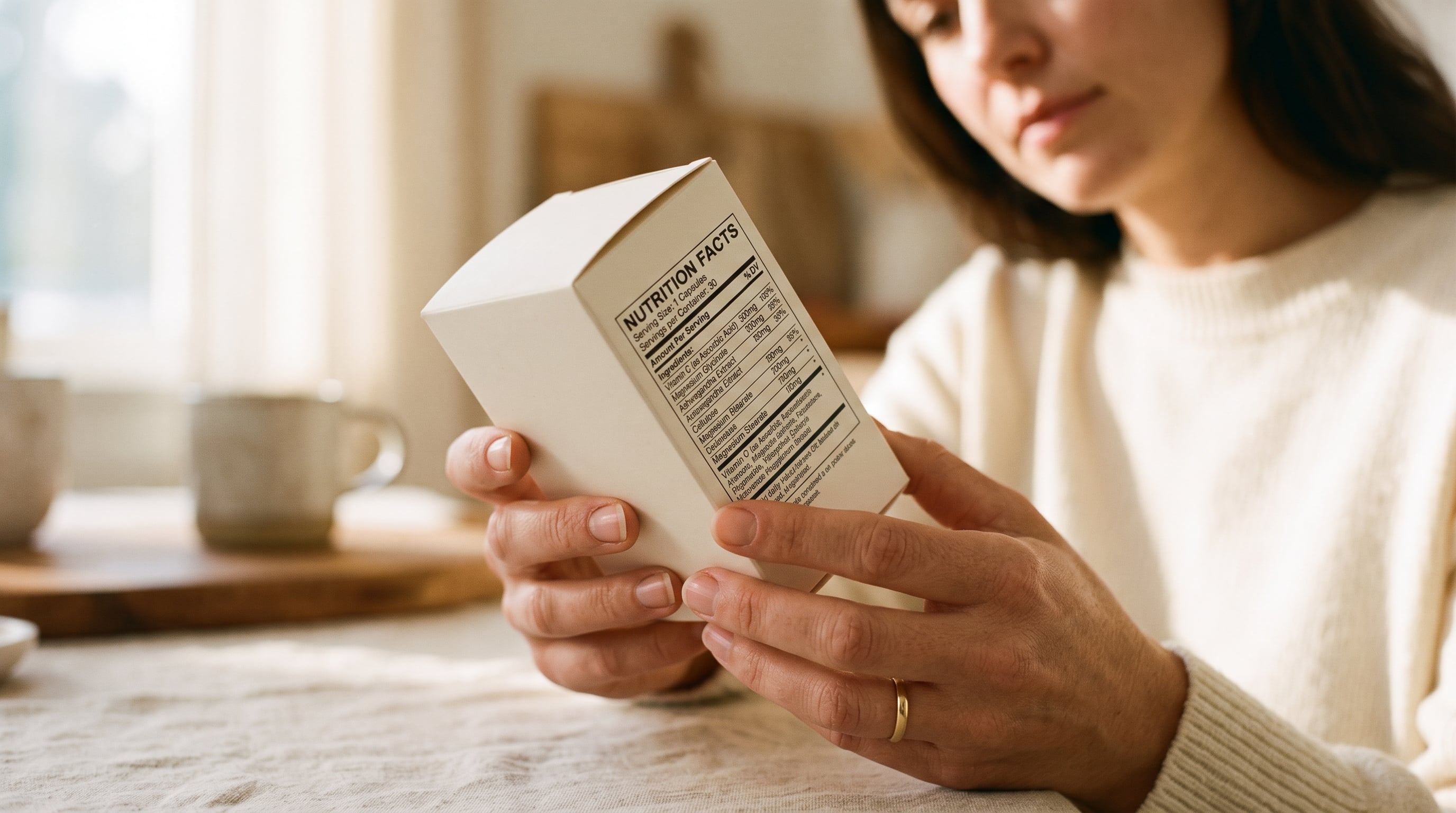
Resistant starch is a separate category from resistant dextrin, the soluble fibre used in some supplement formulations. The names are similar; the ingredients are not. It is worth keeping them apart when you read a label.
05When to stop self-managing
Persistent, severe or changing bloating, pain or bowel habits should not be normalised or managed through supplements. Unexplained weight loss, bleeding, a new change in bowel habit over the age of fifty, or symptoms that wake you at night all warrant a clinical assessment. A food supplement cannot diagnose, treat, cure or prevent any disease — and IBS is a diagnosis of exclusion made by a clinician, not by a symptom diary.
Important information
Food supplement. Not intended to diagnose, treat, cure or prevent any disease. Not a substitute for a varied and balanced diet or a healthy lifestyle. Keep out of reach of young children. Do not exceed the recommended daily dose. If you are pregnant, breastfeeding, taking medication or have a medical condition, consult your doctor or pharmacist before use. Individual results may vary.
This article is general information about probiotics as a category. It is not medical advice and does not describe outcomes of any specific product. Always speak to your GP or pharmacist about persistent digestive symptoms.